My Recent Work

How Megan Thomas used Oregon State’s MEng program to launch a career at Apple | College of Engineering

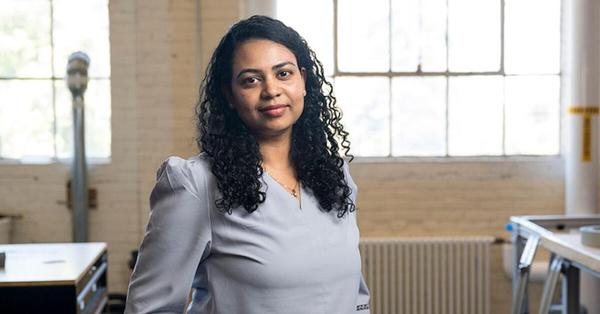
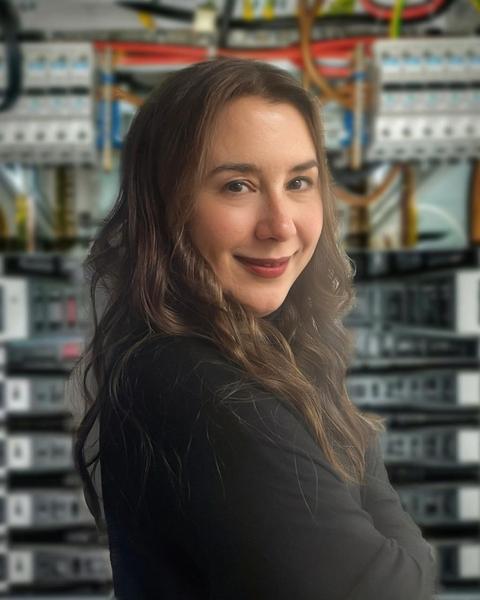
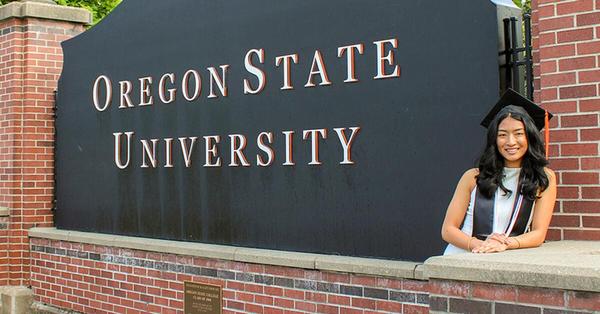
For many engineering students, graduation marks the end of a long academic journey. For Megan Thomas, it was an opportunity to go one step further.

While earning her bachelor's degree in electrical and computer engineering from Oregon State University, Thomas chose to enroll in the Accelerated Master’s Program, which allowed her to stay for an additional year and complete a Master of Engineering (MEng) degree. The decision gave her the opportunity to deepen her technical expertise, build on val...
High-performance computing and AI accelerate semiconductor innovation in Oregon | College of Engineering

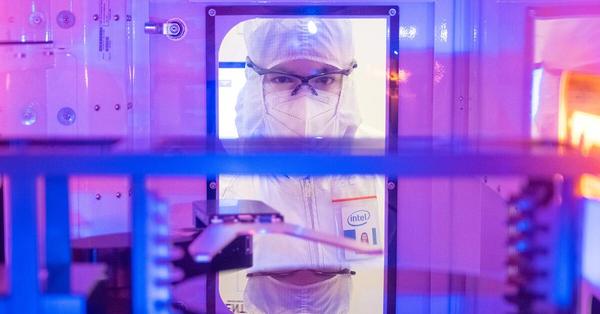
"My role is to facilitate the use of OSU's high-performance computing resources and help guide the use of high-performance computing techniques to accelerate their codes," Hale said. While the collaboration is still in its early stages, he expects the Huang Complex to help bring together the computing expertise, domain knowledge, and industry partnerships needed as the project scales.

Nguyen's research addresses one of the semiconductor industry's most difficult imaging challenges: understandin...

Chasing fusion's hardest problem on the nation's fastest university supercomputer | College of Engineering

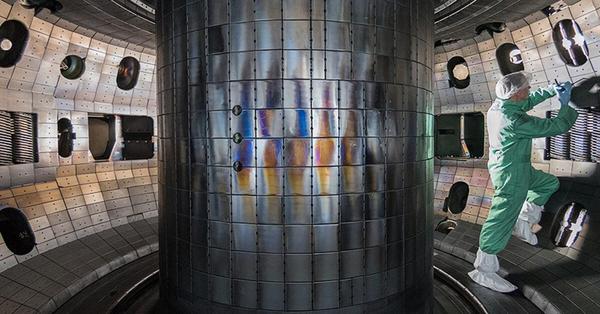
The Huang Complex supercomputer's architecture makes it particularly well suited for this work. The system is built on NVIDIA's Vera Rubin platform — a next-generation GPU architecture optimized for the kinds of extreme-scale deep learning workloads that Rodriguez's project requires. He has trained large models on Frontier, the Department of Energy's flagship supercomputer at Oak Ridge National Laboratory, and found the experience instructive about the limits of general-purpose high-performance...

PRISM Group eyes first major test of OSU’s new NVIDIA supercomputer | College of Engineering

When Oregon State University’s NVIDIA-powered supercomputer comes online in the Jen-Hsun Huang and Lori Mills Huang Collaborative Innovation Complex, one of its first major challenges will come from a project that millions of people already rely on, often without realizing it.

The PRISM Group — Chris Daly, Dylan Keon, and Kellie Vache — has been selected by OSU’s Research Computing Office as one of the first groups to prepare a “hero run” on the new system, through the Huang Complex Supercomput...

Oregon State’s ORTSOC is preparing students for a rapidly evolving cybersecurity threat landscape | College of Engineering

Every year, hundreds of ransomware attacks hit hospitals, school districts, and local governments across the United States. Many of these organizations have neither the budget to hire dedicated security staff nor the expertise to defend themselves. At Oregon State University, a growing number of students are doing something about it — and getting a world-class education in the process.

ORTSOC, the nation’s first cybersecurity teaching hospitalTM, is the backbone of OSU's cybersecurity practicum...

Turning moon trash into mission-critical materials | College of Engineering

Managing waste on Earth is difficult enough, but deep-space exploration raises the stakes dramatically. For astronauts on long-duration lunar missions, trash cannot simply be thrown away; every ounce of refuse represents lost mass, trapped energy, and a physical storage hazard.

To tackle this challenge, NASA launched the LunaRecycle Challenge, a multi-phase competition designed to incentivize low-mass, energy-efficient technologies that can recycle solid waste into usable products.

In March 20...

Growing intelligence: How hybrid AI models are transforming agricultural decision-making | College of Engineering

The result: 60% higher phenology accuracy and 40% higher cold-hardiness accuracy than deployed models, while remaining biologically realistic and generalizing across weather regimes. Critically, the model also generalized across weather regimes — where pure deep learning models collapsed when tested in Vermont or California after training in Washington State, DMC-MTL showed only marginal degradation.

Multi-task learning lets the model share patterns across 32 grape cultivars rather than trainin...

Wenqian Dong is teaching supercomputers to think differently | College of Engineering

The approach centers on what Dong calls machine‑learning surrogates — neural networks trained to approximate the behavior of complex physics‑based simulations. These surrogates don’t replace science with guesswork. Instead, they learn the relationship between inputs and outputs so well that they can stand in for the most time‑consuming steps of a simulation, often cutting runtimes from weeks or months to hours or days.

“Hardware is transforming very quickly, and the AI models are transforming v...

Sandhya Saisubramanian receives NSF CAREER award | College of Engineering

In the controlled, predictable environments of a laboratory or a warehouse, a robotic arm can stack boxes with surgical precision, and a robot vacuum can navigate a room without a single misstep. But transport those same systems into the chaotic, unscripted reality of the real world — an open environment that defies perfect mathematical modeling — and their reliable behavior can quickly unravel.

Addressing this fundamental gap is the core mission of Sandhya Saisubramanian, assistant professor o...

Building robots that matter | College of Engineering

When Alexander Roller talks about robotics, he doesn’t linger on hypotheticals. He talks about sawdust, actuators, and machines that have to work outside the lab.

A robotics master’s student at Oregon State University, Roller spends his time building robots designed for the physical world, from industrial automation systems to humanoid platforms, and creating opportunities for other students to do the same. Across projects, clubs — including the Humanoid and Intelligent Robotics Organization th...

From INTO to professor: Zixuan “Steve” Feng’s long road to academia | College of Engineering

When Feng arrived at Oregon State University, he did not find himself in a lecture hall or lab. Instead, he spent an entire year in the INTO OSU program learning English. “My English level was very low,” he said. “So, I finished one year just learning English, then entered the pathway program.”

Even after progressing into regular coursework, the challenges remained intense. “One year of English learning is not enough to fully understand everything in lectures,” he said. “That was very rough.”...

Chris Ho’s entrepreneurial journey through computer science | College of Engineering

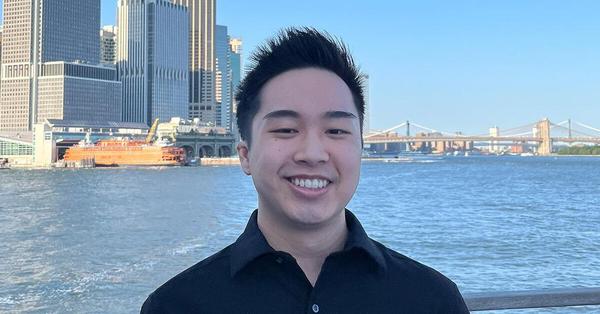
From the moment Chris Ho arrived at Oregon State University, he approached college with a builder’s mindset: find a real problem, prototype a solution, and learn everything possible along the way. Now a third‑year computer science student in the College of Engineering, Ho has turned that philosophy into entrepreneurship, student leadership, and a string of high‑profile internships, culminating this summer with a software engineering role at Apple.

Entrepreneurship is the throughline of Ho’s col...

Todd Palmer Appointed Senior Advisor and Chief Scientist for Research Computing at Oregon State University | College of Engineering

“If you think about what’s needed to excel in guiding Oregon State’s outstanding PIs in this exciting new era of advanced research computing, Dr. Palmer embodies the key traits,” said Irem Tumer, the university’s Vice President for Research and Innovation. “He has incredible expertise in secure computation and data storage, he’s worked with some of the country’s top supercomputers, and he knows how to help our PIs leverage OSU’s computing systems to make their research even more impactful to the...

At the limits of exascale: Kyle Niemeyer on combustion, AI, and the future of high‑performance computing | College of Engineering

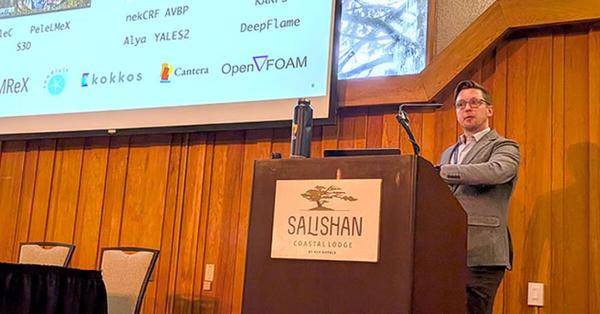
When Oregon State University’s Kyle Niemeyer, associate professor of mechanical engineering, arrived at the Salishan Lodge on the Oregon coast this spring, he found himself in an unusually rare position for an academic: one of only a handful of university researchers in a room dominated by the architects of the world’s most powerful supercomputers.

The Salishan Conference on High-Speed Computing is an invitation‑only meeting that has quietly shaped the trajectory of high‑performance computing (...

Landmark study reveals century-long cycles in U.S. suicide rates and a long-term crisis among youth

Suicide rates in the United States follow striking, decades-long cycles likely shaped by broad social forces, according to a major new study published in the Proceedings of the National Academy of Sciences (PNAS). But beneath that long-term rise-and-fall pattern, researchers uncovered a deeply concerning and persistent trend: suicide risk among young people has been rising steadily for more than half a century, affecting each new generation earlier in life.This study by the REDUCE (Reduce Early...

Utah authorizes state-funded psychedelic research for veterans with PTSD

“This legislation provides for a clinical trial with IRB, DEA, and FDA oversight,” he said. “The goal is to establish safety and feasibility first—can this be done safely in this population, and is it acceptable to veterans?”The state has allocated $1 million to support the study, with the possibility of additional philanthropic funding and grant-based support. The total number of veterans enrolled in the trial will depend on the amount of available funding.Beyond symptom reduction, the study ai...

US Struggles to Build High-Speed Rail

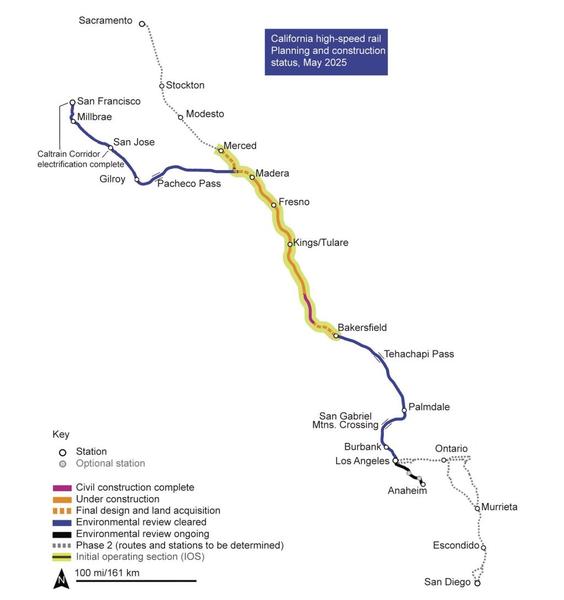
The summer of 2025 marked a new low for the US state of California’s long-standing high-speed rail (HSR) ambitions. In a move that stunned state officials and rail advocates, the Trump administration abruptly pulled 4 billion USD in federal funding from the project,
redirecting the money to other passenger rail efforts across the country that would prioritize safety and efficiency—without the climate and diversity requirements that had been part of previous grant programs.

Bridging the Gap: How the University of Utah's StrokeNet Is Delivering Breakthroughs to the Mountain West

From the moment someone experiences a stroke—a sudden interruption of blood flow to the brain—the clock is ticking. Getting the best care as quickly as possible can make the difference between recovery, lasting impairment, or death. But for patients in rural areas or those treated at smaller hospitals, that care may be hours away.
Load More